Last updated: 8 March 2024
Have you ever wondered how money apps handle problems without crashing? Let's explore the behind-the-scenes magic of error handling. In this blog, we'll look closely at "Handling Errors Gracefully." Imagine dealing with changing money values every second. Such a situation can cause errors. Furthermore, errors can mess things up. Get ready to explore how to gracefully handle errors when using the CurrencyFreaks - free currency converter API.
We'll talk about common issues like bad connections, too many requests, and unexpected changes. At the same time, we will explain the effective strategies for error handling. Let's make error handling easy to understand and fun!
What Is CurrencyFreaks Exchange API?
CurrencyFreaks is an exchange rates API made by JFreaks Software Solutions, a team focused on data and location-aware apps.
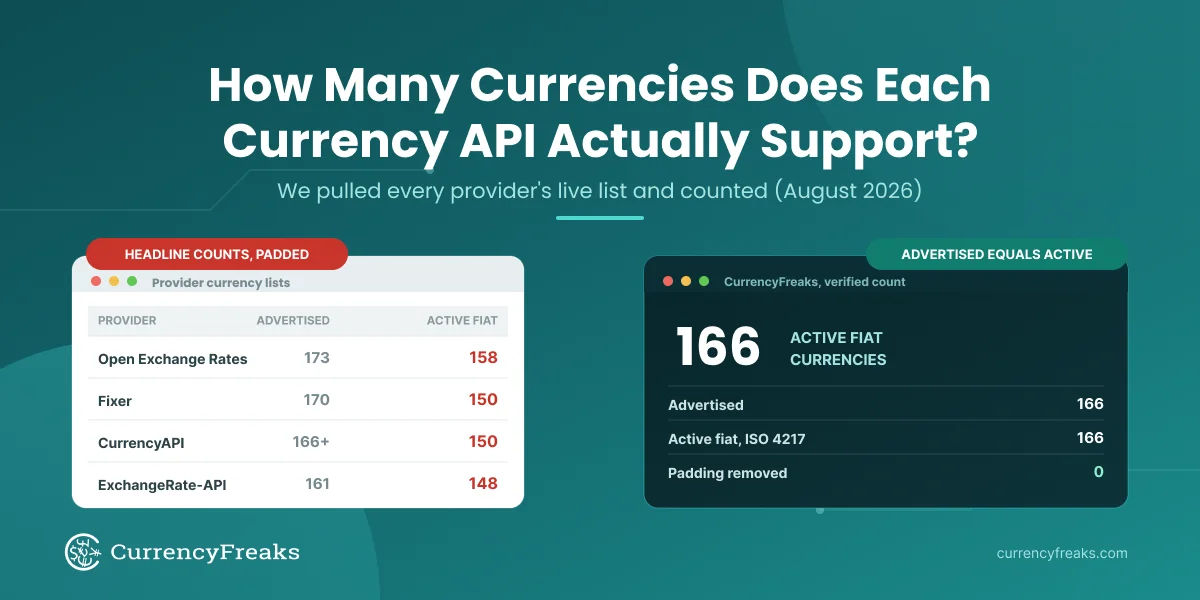
They noticed that developers really wanted a simple, reliable, and affordable tool to convert money easily. So, they created CurrencyFreaks API. It helps developers get the latest and correct info on 1000+ world currencies. This includes 166 regular currencies, 4 metals, and 874 cryptocurrencies.
CurrencyFreaks grabs its data from trusted sources in the money and crypto world.
What Are the Common Errors in API Integration?
This table provides a concise overview of common API integration errors and their descriptions.
Common API Integration Errors
Authentication Errors
Issues with providing permission to use an API. For example, having the wrong codes or expired access.
Rate Limiting Errors
Problems arise when sending too many requests to the API too quickly, similar to being timed out.
Handling Responses and Errors
Difficulty in understanding and responding correctly to what the API is communicating.
Endpoint Changes
Integrations break when the API is updated or modified, and developers are unaware of the changes.
Parsing Errors
Misinterpretation of data due to differences in expected and received formats. It is much similar to misreading information.

What Is the Importance of Graceful Error Handling in Exchange Rates Applications?
Here's why one should handle errors gracefully when dealing with APIs or exchange rate applications:
✔️Clear Messages Instead Of Raw Errors
CurrencyFreaks error responses include a machine-readable code and a message with placeholders like {PLAN_NAME} and {ALLOWED_REQUESTS} (covered in Step 5 below). Catching these instead of letting them surface raw means you can show "You've used all 1,000 free calls this month" instead of a bare 429 status code.
✔️Keeping Things Stable When The Free Plan Limit Hits
The free plan caps out at 1,000 calls a month. Without error handling, hitting that limit means every subsequent request throws an unhandled exception. Checking for a 429 response and falling back to a cached rate keeps the rest of your app running.
✔️Faster Debugging With Specific Status Codes
A 401 means the API key is wrong or missing; a 404 means the endpoint or currency code doesn't exist; a 429 means the rate limit is hit. Branching on these (as in the code below) tells you exactly what broke without digging through logs.
✔️Not Losing In-Flight Requests
If a request to /rates/latest fails mid-transaction (say, during a checkout price lookup), catching the exception and falling back to the last successfully cached rate keeps the transaction from failing outright.
✔️Users Trust An App That Degrades Gracefully
An app that shows a slightly stale exchange rate with a "last updated" note during an outage keeps working. One that crashes on the first failed request doesn't.

What Are the Strategies for Graceful Error Handling?
Graceful error handling is an important part of software development. It helps us ensure that applications can smoothly handle unexpected issues. Moreover, this practice minimizes disruption for users. As a result, we can maintain system stability.
Several strategies are helpful for graceful error handling. We will discuss a few of them. Let’s begin.
Firstly, developers can implement meaningful error messages. For example, if there is too much traffic on a website and it is responding slowly, We can show error messages like:
“The website is overloaded with many customers. Please try again later.”
It will give users clear and concise information about what went wrong and how to proceed. Human-readable messages facilitate user understanding. Moreover, it can also guide them towards a resolution without causing frustration.
Additionally, logging and monitoring mechanisms are also important in graceful error handling. We can use logging tools to capture detailed information about errors. It is important to note that this practice will enable us to identify the root causes swiftly.
Monitoring tools help track application performance in real-time. Therefore, we can proactively address potential issues before they impact users.
Implementing robust validation and input checking is another strategy to enhance error handling. We must validate user inputs and check for potential errors at the outset. It will help developers prevent many issues before they occur. As a result, we can create a more resilient system.
Furthermore, incorporating fallback mechanisms and failover strategies is also helpful. This may involve switching to alternative services or modes to maintain partial functionality even when certain components encounter problems.
How Do You Implement Error Handling With CurrencyFreaks Exchange API?
Error handling in the context of using an API involves checking and managing responses from the API. Those responses help us to handle various situations, such as:
-
Successful requests
-
Authentication failures
-
Server errors, and so on.
Here's an example of code on how you will implement error handling with CurrencyFreaks Exchange API.
1. Make API Requests
Start by making requests to the CurrencyFreaks Exchange API using a library like requests in Python.
import requests
2. Handle HTTP Status Codes
Check the HTTP status code returned by the API response. Successful responses usually have a status code of 200. Various error codes indicate different issues:
import requests

response = requests.get('API_ENDPOINT')

if response.status_code == 200:
    # Successful response
    data = response.json()
    # Process the data as needed
elif response.status_code == 401:
    # Authentication error
    print("Authentication failed. Check API key.")
elif response.status_code == 404:
    # Resource not found
    print("Resource not found.")
else:
    # Other errors
    print(f"Error: {response.status_code}")

3. Handle JSON Response
Parse the JSON response and check for any error messages provided by the API.
import requests

response = requests.get('API_ENDPOINT')
data = response.json()

if 'error' in data:
    print(f"API Error: {data['error']['info']}")
else:
    # Process the data as needed
    print(data)
4. Handle Exceptions
Use try-except blocks to catch exceptions that might occur during the API request.
import requests

try:
    response = requests.get('API_ENDPOINT')
    response.raise_for_status()  # Raise an HTTPError for bad responses
    data = response.json()
    # Process the data as needed
except requests.exceptions.HTTPError as errh:
    print(f"HTTP Error: {errh}")
except requests.exceptions.ConnectionError as errc:
    print(f"Error Connecting: {errc}")
except requests.exceptions.Timeout as errt:
    print(f"Timeout Error: {errt}")
except requests.exceptions.RequestException as err:
    print(f"Error: {err}")
Remember to replace 'API_ENDPOINT' with the actual URL endpoint you are using and adapt the code according to the specific requirements of your application and the CurrencyFreaks Exchange API.
5. Handle API-Specific Errors
Refer to the CurrencyFreaks Exchange API documentation for information on specific error responses that the API might return.
Here are the errors and their meanings when you use CurrencyFreaks API:
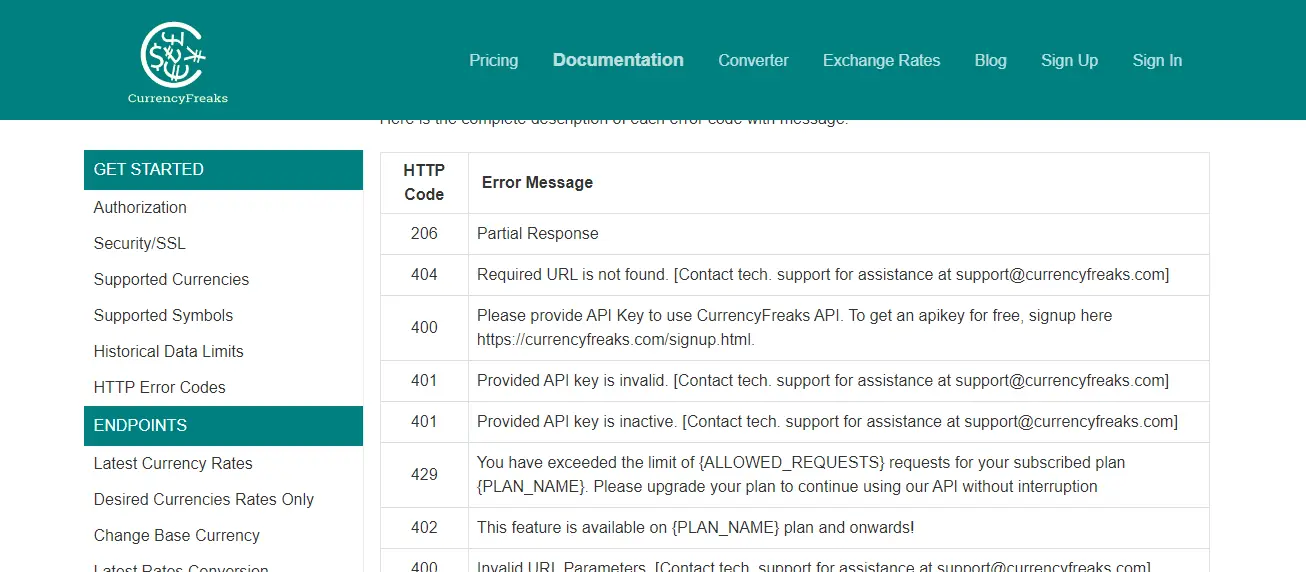
Please note that some messages include placeholders like {ALLOWED_REQUESTS}, {PLAN_NAME}, {DATE}, {IP_ADDRESS}, {CURRENCY}, {AVAILABLE_FROM}, and {AVAILABLE_UNTIL}. You should replace these placeholders with actual values when displaying or logging the error messages in your application.
Check further details at CurrencyFreaks documentation.
Conclusion
Graceful error handling is one of the most important development tasks developers should know. It makes our application successful and engaging. In the above article, we discussed how graceful error handling can make a difference in our projects. Besides, we mainly focused on graceful error handling when using API integration. Our main focus was CurrencyFreaks exchange API. If you have any questions, let us know in the comments.

FAQs
What Is Currency Exchange API?
A currency exchange API helps us achieve currency exchange rates for multiple purposes. Businesses are demanding accurate currency exchange solutions these days. CurrencyFreaks can be their best currency exchange solution.
Is There a Free Exchange Rate API?
Yes. CurrencyFreaks API helps us achieve free exchange rates. However, the free plan comes with some limitations. You must upgrade to a paid plan for advanced features.
Is Conversion API Free?
CurrencyFreaks API helps us convert currencies for free.
What Is the Iban Exchange Rate API?
The iban exchange rate API is one of the most popular currency conversion APIs available on the market.
Sign Up for free at CurrencyFreaks - Handle errors gracefully with our comprehensive documentation.